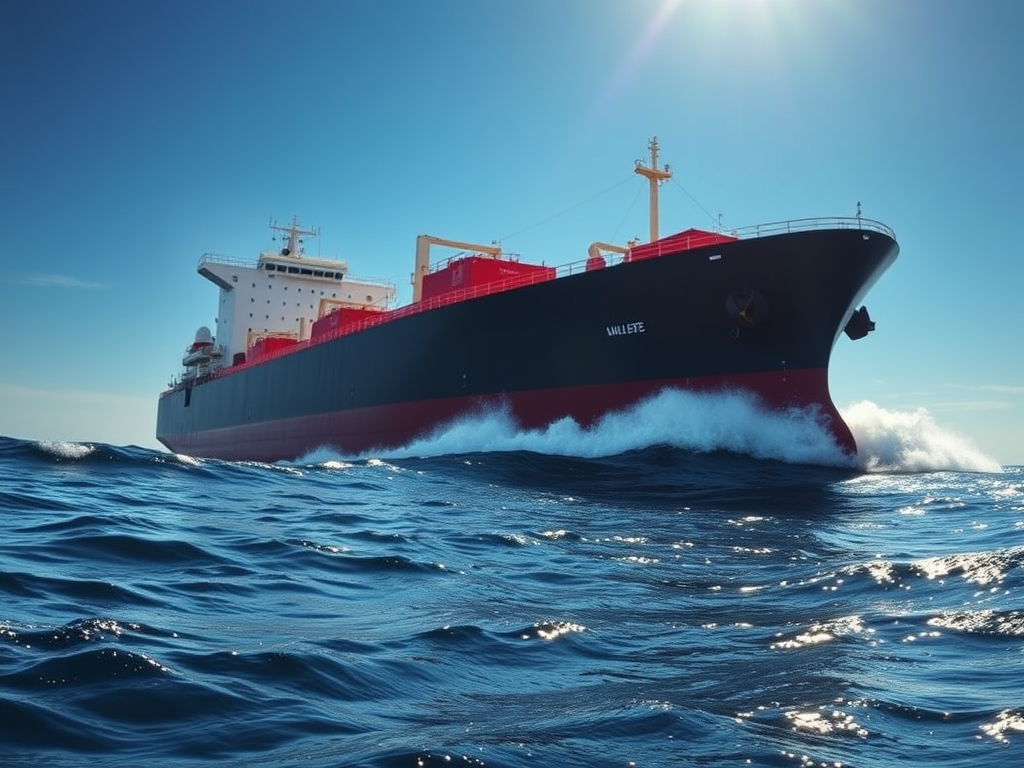
A Good Company At A Bad Price.
Seatrium builds offshore platforms, rigs, floaters and specialised vessels, and repairs and converts them. It was created when Sembcorp Marine absorbed Keppel Offshore & Marine in 2023. Temasek is the largest shareholder, and the fabrication capability it inherited is genuinely difficult to replicate.
I’m still not buying it here.
I bought at around SGD2.40, averaged down to SGD2.11 during the April 2025 Liberation Day selloff, and sold in October when it got back to SGD2.40.
Small profit.
I’m not going to call that a successful investment thesis. The rebound rescued the trade. That’s different.
The Big Picture
A good company doesn’t automatically make a good stock.
That’s really the whole argument here.
The turnaround is real. Revenue is growing, margins are improving and the order book is more diversified than it used to be.
But at close to 30 times trailing earnings and around 20 times forward earnings, you’re paying a lot for a contractor whose order intake is still heavily influenced by the oil cycle.
And I’m not particularly bullish on oil.
There’s also no meaningful dividend to compensate you while you wait.
The Case For Seatrium
The fabrication capability is real.
This isn’t something management created with a PowerPoint presentation. Both Sembcorp Marine and Keppel O&M spent decades building offshore structures and ships for customers who don’t tolerate delays or poor execution.
That capability took decades to build.
A competitor can’t simply decide next year that it wants the same capability.
The order book isn’t entirely oil and gas.
As at 30 June 2025, around 66% of the order book was conventional oil and gas, with 34% in renewables.
That’s useful diversification.
The problem is that diversification only helps if the two sides aren’t slowing at the same time.
Temasek matters.
Temasek is the largest shareholder, and I view that stake as strategic rather than purely financial.
Singapore doesn’t have many companies with Seatrium’s fabrication capability. If the company ever got into serious trouble, I find it difficult to believe the government would simply walk away.
But there’s an important distinction here.
A shareholder backstop protects the company.
It doesn’t protect the price you pay for the shares.
What To Keep An Eye On
Oil is still the biggest variable.
Upstream customers sanction projects when they have confidence in future crude prices. If oil stays weak, the pipeline eventually gets hit.
That’s my view, and it’s also the biggest assumption behind my valuation.
Renewables may not provide the diversification people expect.
Offshore wind economics have deteriorated and projects have been delayed or cancelled.
The 34% renewable portion of the order book looked attractive when the alternative was assuming everything depended on oil.
It looks less attractive if both markets slow together.
Brazil is too concentrated.
Brazil accounted for around SGD3.2 billion of SGD5.4 billion revenue in 1H2025.
That’s roughly 60%.
The Petrobras disputes make the concentration more obvious. Even if the current issues are eventually resolved, reducing Brazil’s share of revenue requires Seatrium to win meaningful work elsewhere.
That takes time.
Peers are cheaper.
YZJ Shipbuilding trades below 10 times forward earnings. Technip and Subsea 7 are around the mid-teens.
Seatrium is more expensive than both.
You can make Seatrium look reasonable against the Korean yards, but I wouldn’t build an investment thesis around the most expensive comparison.
There isn’t much income while you wait.
The FY2024 final dividend was only SGD0.015 a share.
Maybe that changes.
Management hasn’t given me enough reason to assume it will.
What The Numbers Look Like
Revenue has been climbing from around SGD7.3 billion in 2023 to roughly SGD10 billion expected in 2025.
PATAMI margin is around 5%.
Management has previously targeted up to 10% by 2026.
That’s a big jump.
I haven’t done enough work on the contract book to conclude that 10% is achievable, particularly with the concentration in Brazil. I’d want to see how margins are actually developing across the major projects before paying for that target.
Valuation: What’s It Worth?
Trailing P/E is close to 30 times.
Forward P/E is around 20 times.
That’s expensive for a business still proving that its turnaround is complete.
Against YZJ at below 10 times and the European oilfield services names around the mid-teens, Seatrium is priced as though the difficult part is already over.
I’m not convinced it is.
The Bottom Line
I’m out at SGD2.40.
I’d buy it back. Just not here.
There’s no dividend to anchor the valuation, so I’m looking at earnings.
At around SGD2.40 and 20 times forward earnings, 15 times gets me to roughly SGD1.80. At 13 times, I’m around SGD1.56.
SGD1.80 is where I’d start looking seriously. That’s around the level where Seatrium stops looking obviously more expensive than Technip and Subsea 7.
SGD1.56 is where I’d buy properly.
Things I’m watching from here: new Petrobras awards, resolution of the existing disputes, Brazil falling below 50% of revenue, PATAMI margin moving towards 10%, and order intake following any sustained move in crude.
Good company.
Wrong price.
I’ll wait.
Disclaimer
This is not investment advice. The information may not be accurate. If in doubt, seek professional advice. Do your own research. The author is not responsible for any losses you may suffer from taking a position in any asset mentioned here.